Putting an AI operator in your ecommerce back office
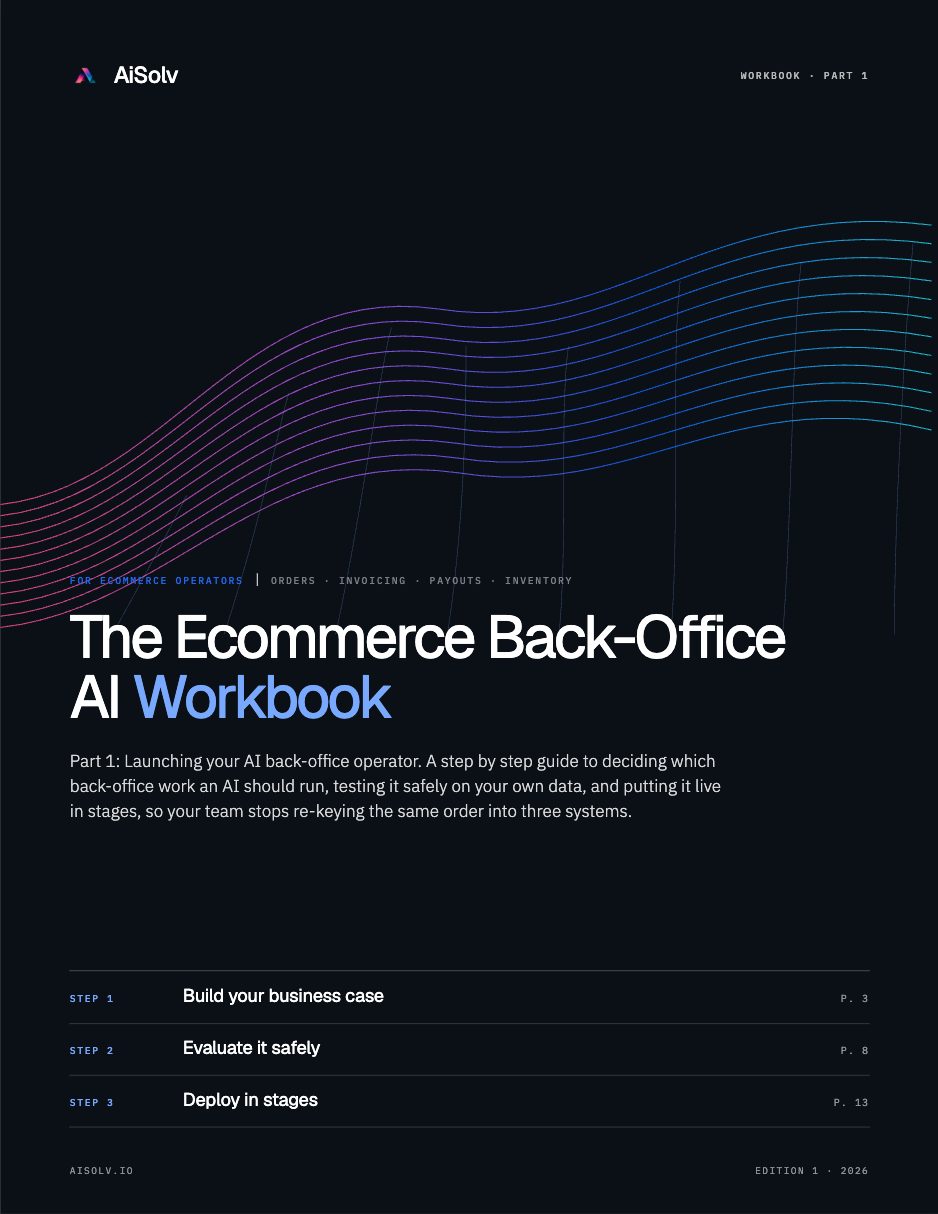
This workbook is your step by step guide to deciding which back-office work an AI should run, from orders and invoices to payouts and stock counts, testing it safely on your own data and putting it live in stages. By the end you'll have a business case, a set of safety and approval rules, and a rollout plan.






 Casa Maestri

 Kamiki



Part 1: Launching your AI back-office operator
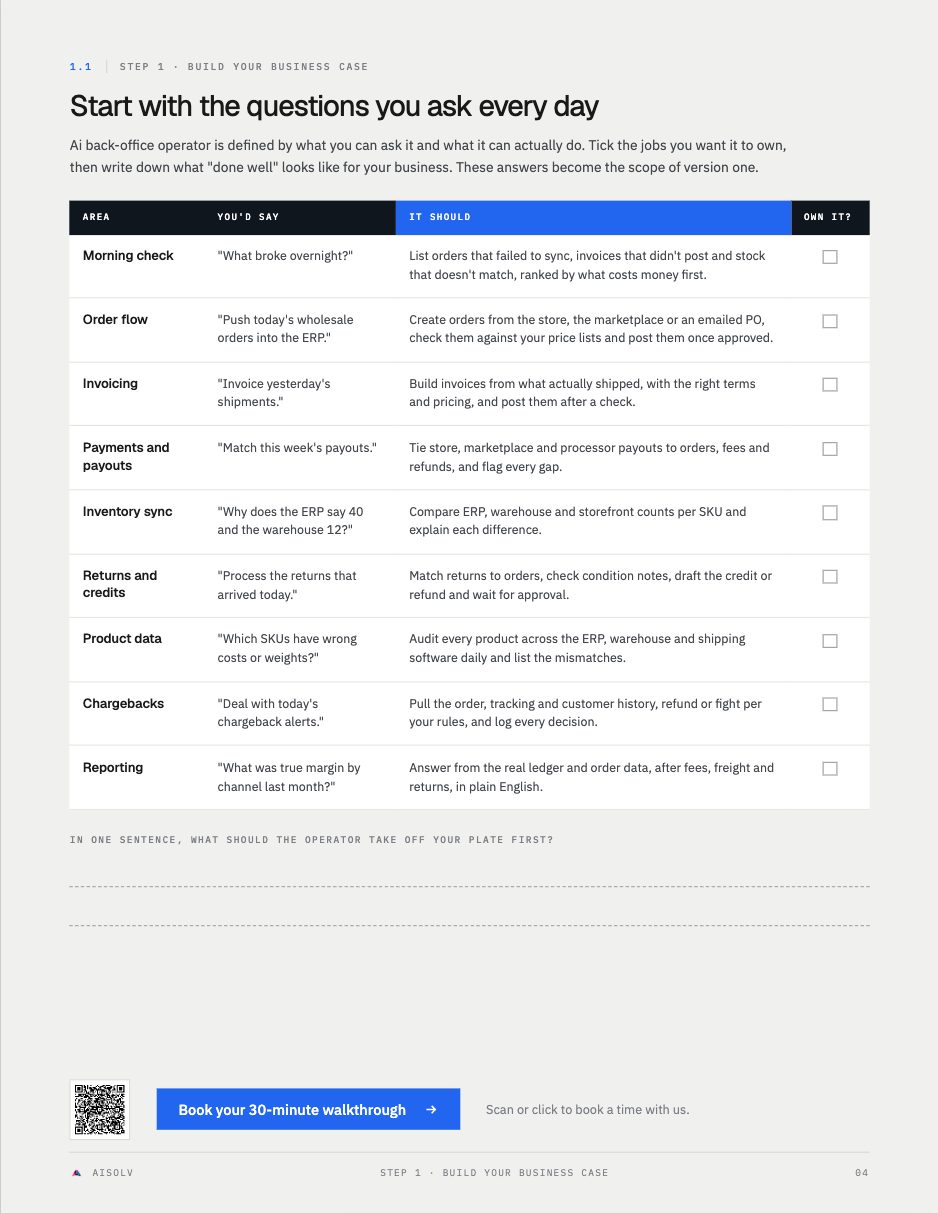
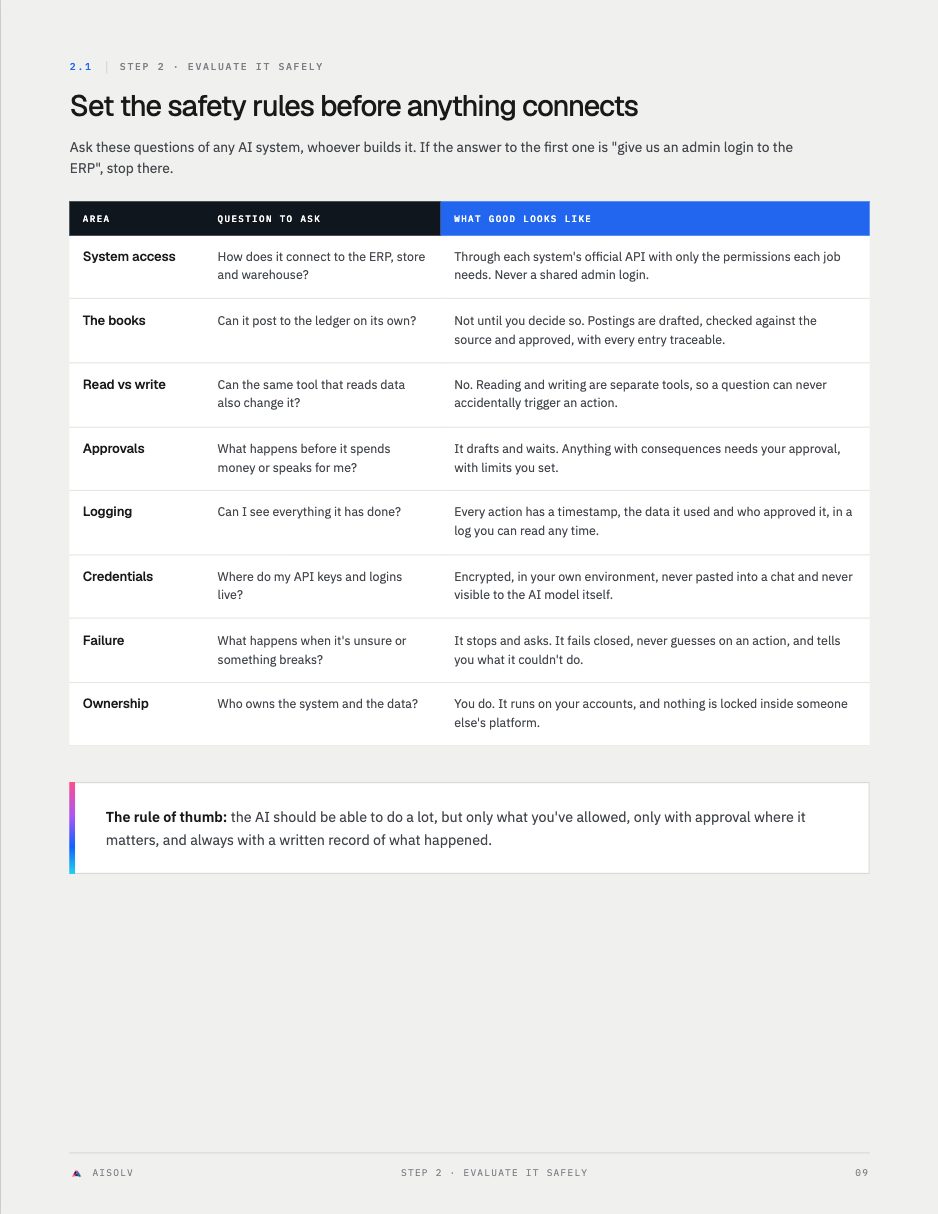
Turn "I should really get AI doing this" into a plan you can hold any builder to. Three steps, each with worksheets you fill in for your own business.
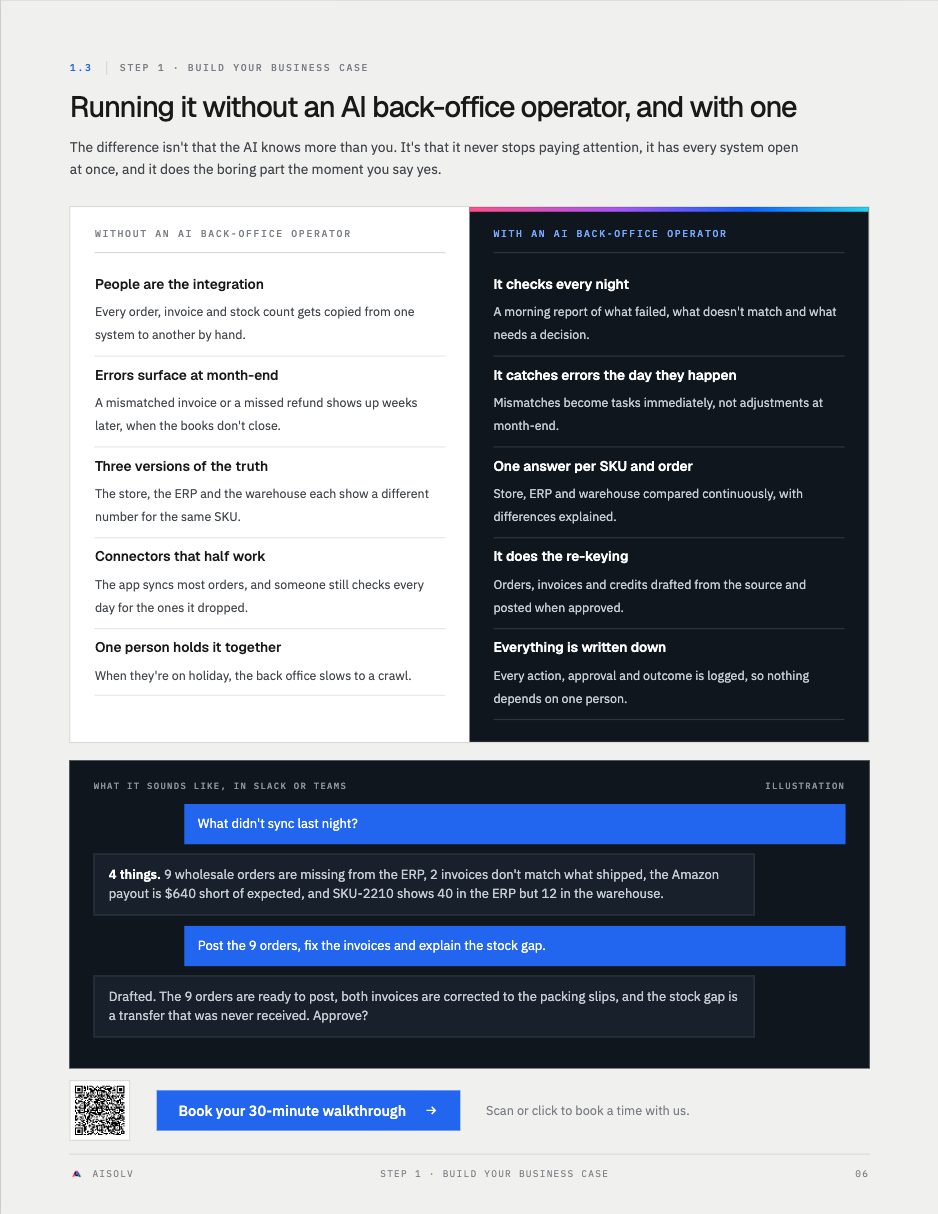
Map how much of your team's week re-keying, invoicing, matching payouts and fixing syncs really takes, and what leaks between systems.
Set the access and approval rules any AI must pass before it writes to your ERP or books, then test it on your own messiest orders.
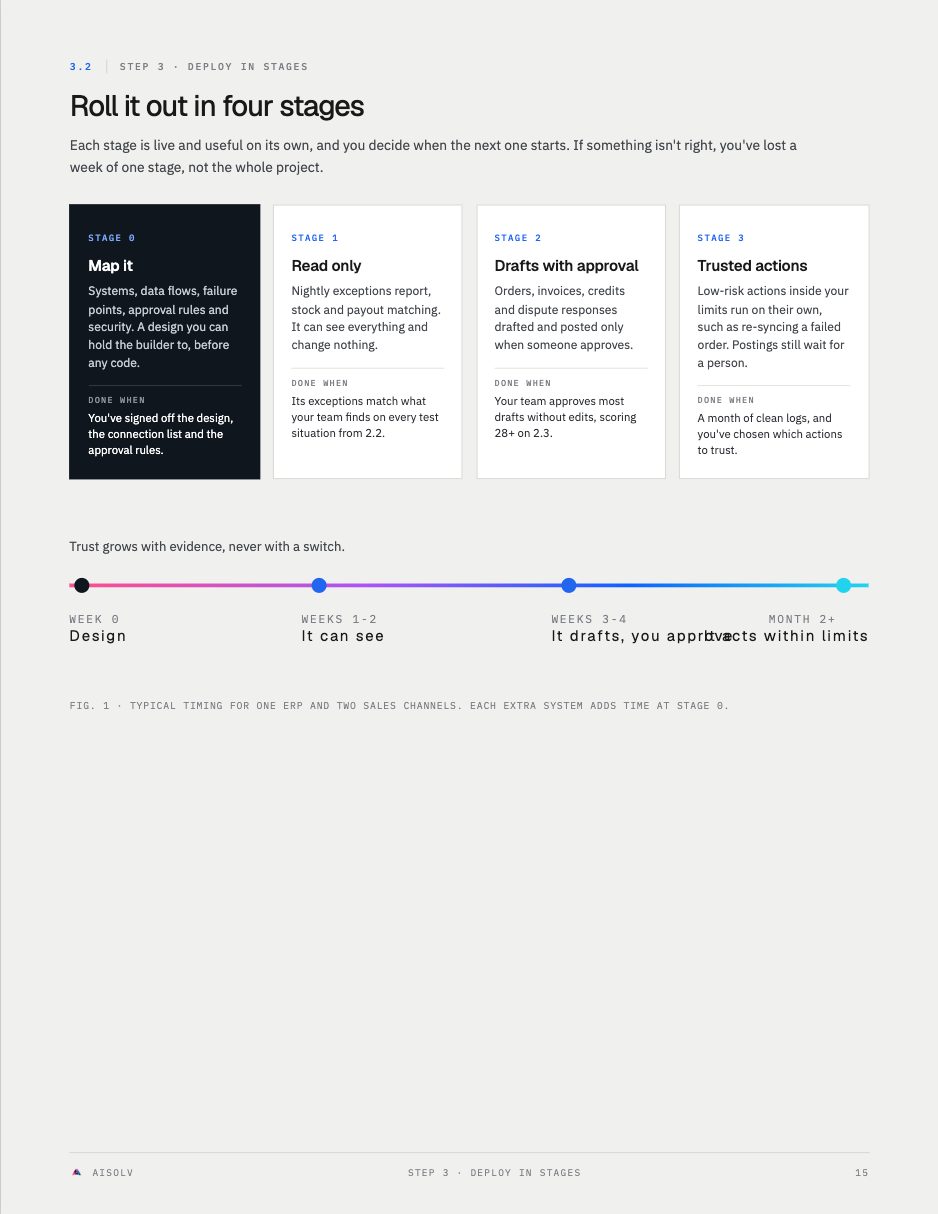
Know exactly what version one includes and put it live in four stages, from read-only checks to trusted actions.
Worksheets, not theory
We built the guarded, staged setup in this workbook for a $100 million supplement ecommerce brand.
invoices on a real retailer remittance matched to the penny, with all 132 found
minutes a day on chargeback alerts, with more than 91% handled automatically
audited daily across the ERP, the warehouse system and the shipping software
Ecommerce teams who are done being the integration
- Ecommerce brands selling across their own store, Amazon, wholesale or retail, usually doing $10M to $100M.
- Ops and finance teams who re-key orders, invoices and stock counts between systems every week.
- Teams that bought connectors and apps and still have a person checking that everything synced.
- Owners who want month-end, order flow and inventory to stop depending on one person's spreadsheet.