Launching an AI marketing agent for your ecommerce brand
This workbook is your step by step guide to deciding what an AI should run across your ads, email and analytics, testing it safely on your own accounts and putting it live in stages. By the end you'll have a business case, a set of safety and approval rules, and a rollout plan for an agent that explains your numbers and drafts the fixes.






 Casa Maestri

 Kamiki



Part 1: Launching your AI marketing agent
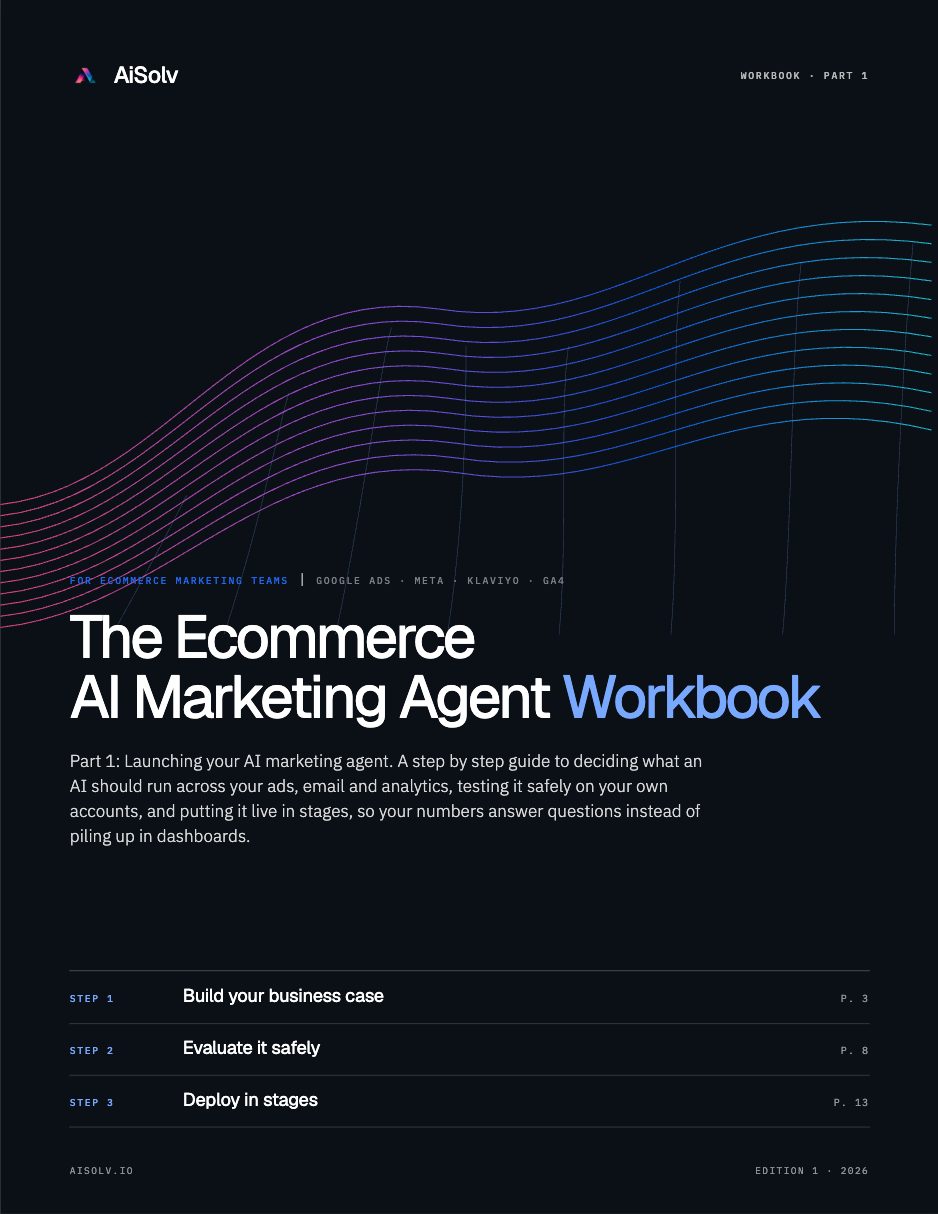
Turn "I should really get AI doing this" into a plan you can hold any builder to. Three steps, each with worksheets you fill in for your own business.
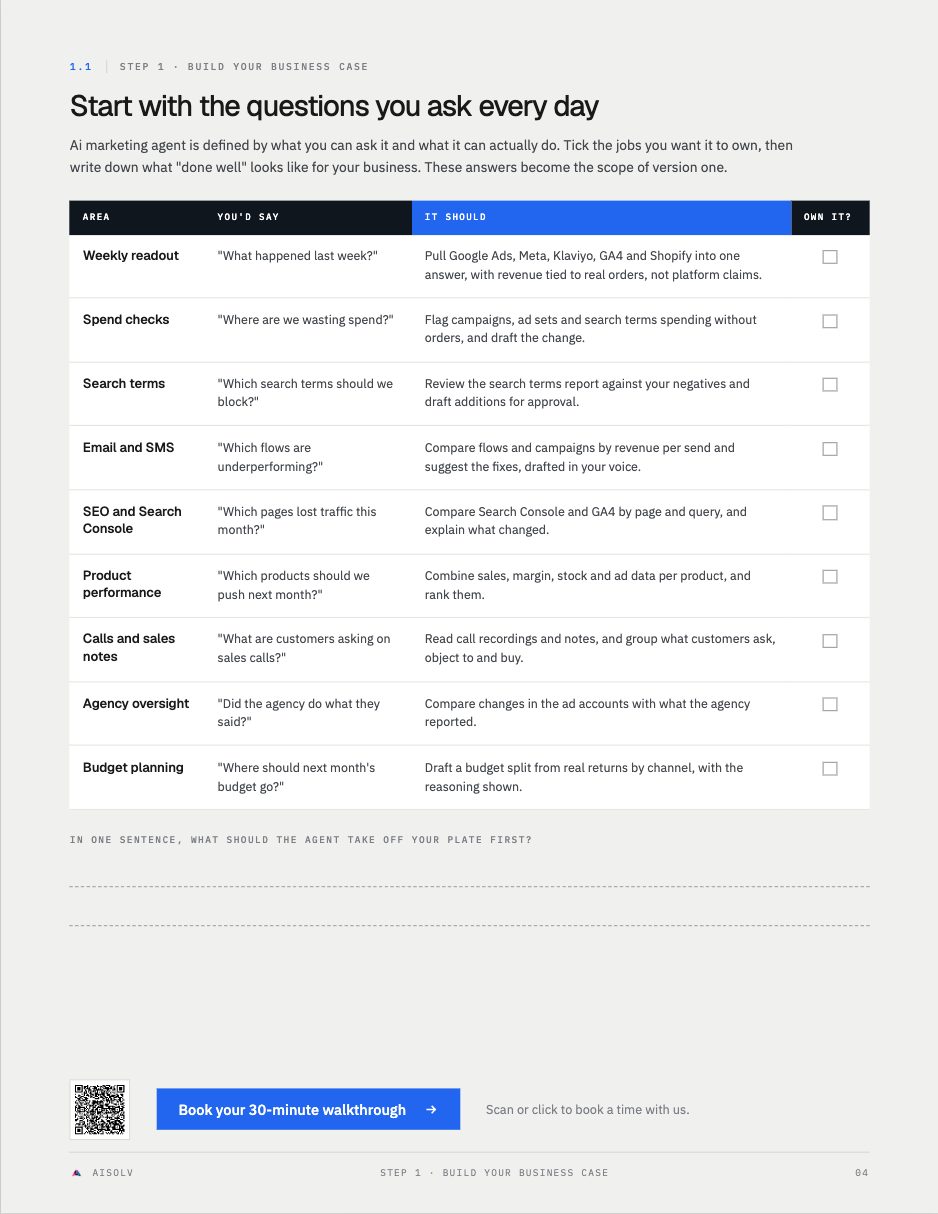
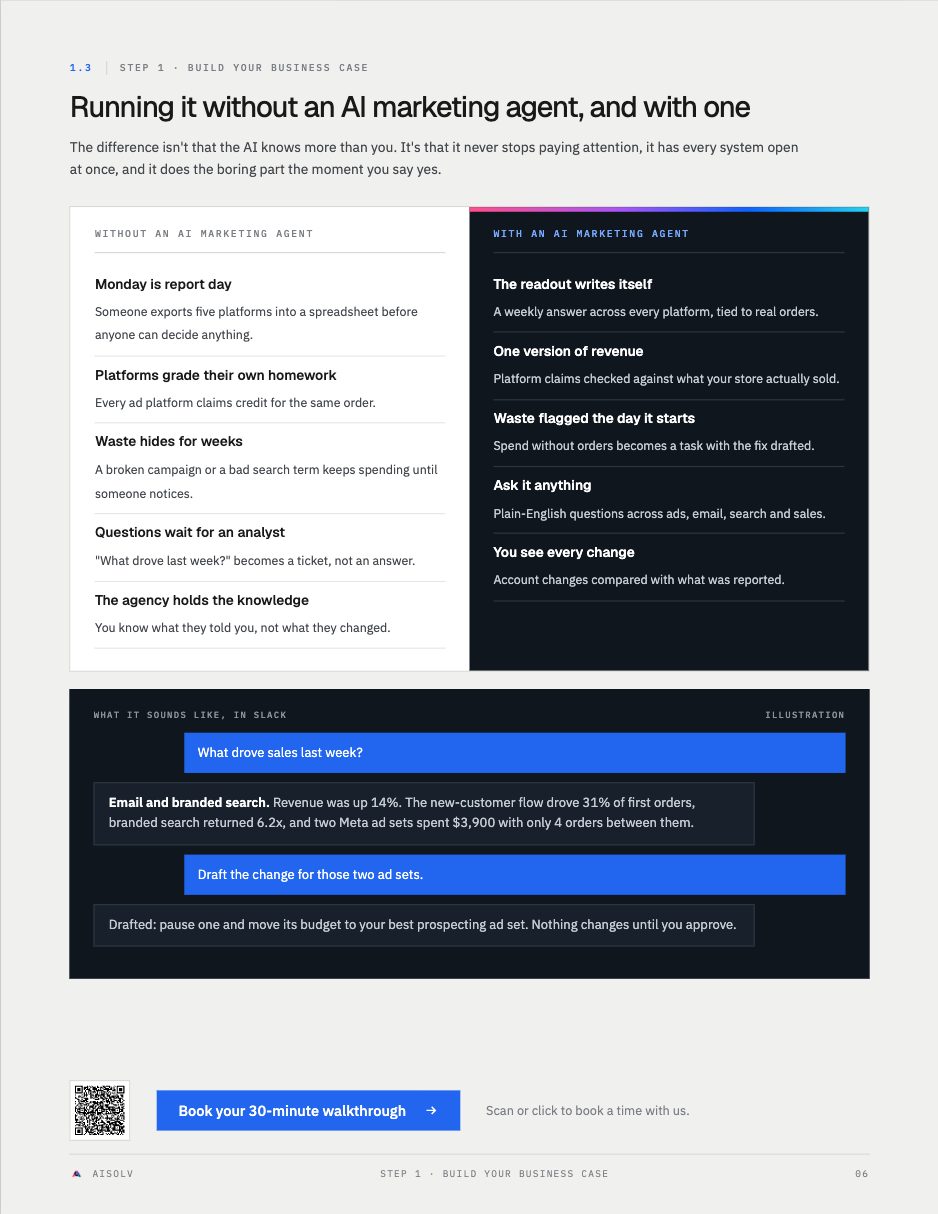
Map how much of your week goes to reporting and checks, and how much spend leaks before anyone notices.
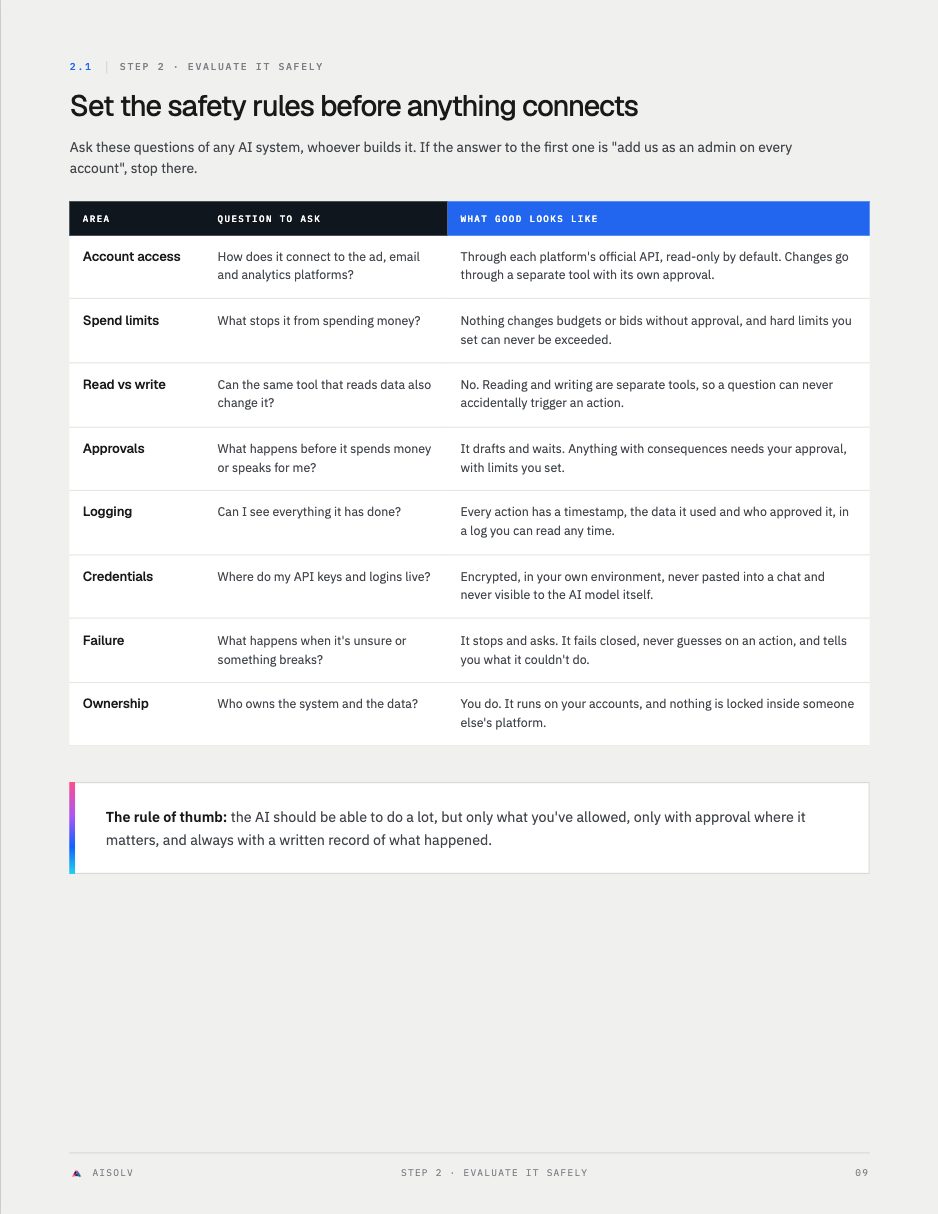
Set the access and approval rules any AI must pass before it touches your ad accounts, then test it on your own numbers.
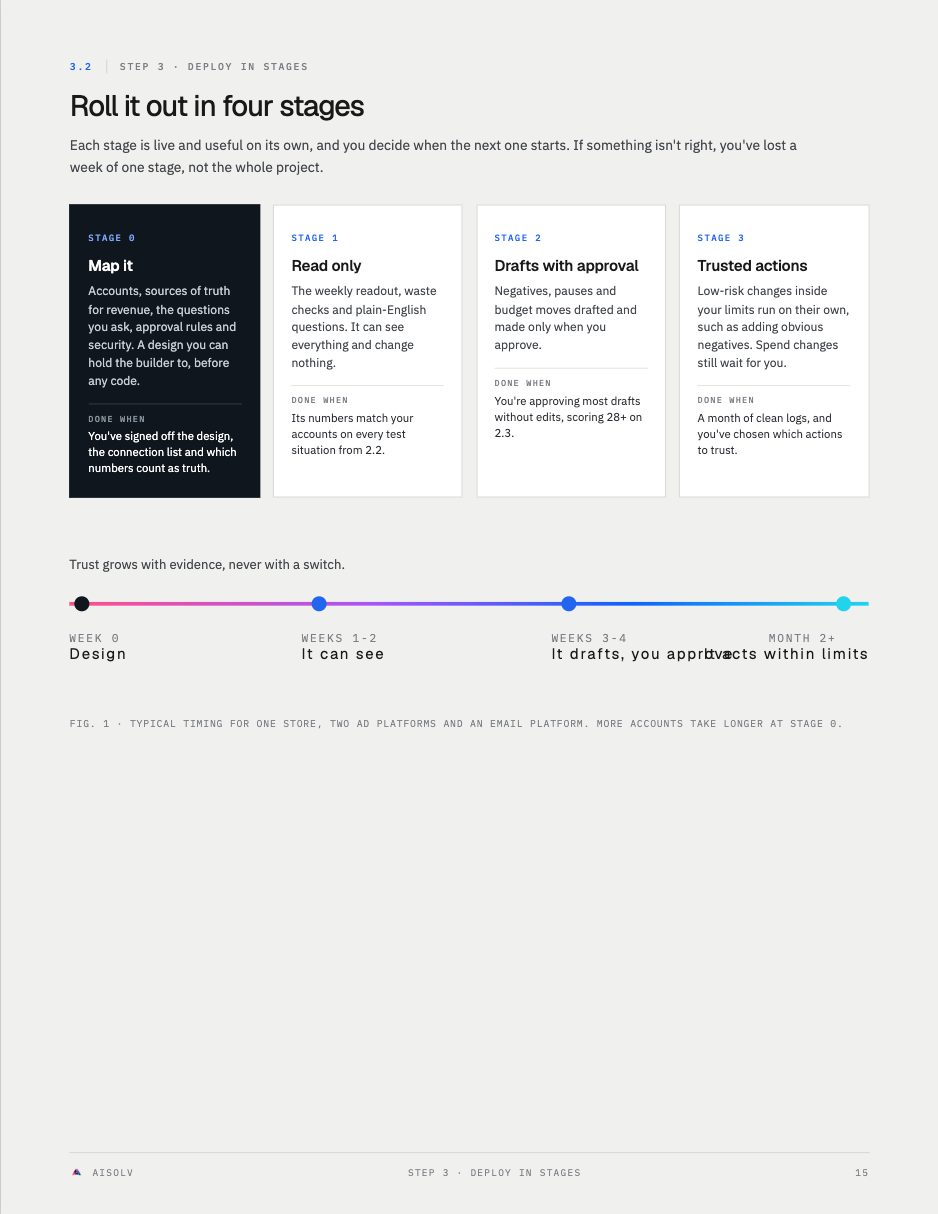
Put it live in four stages, from read-only answers to trusted changes, each one working before the next.
Worksheets, not theory
We built this for a $50 million B2B ecommerce company running nine brand storefronts.
AI tools on 23 connected servers across the ERP, accounting, call tracking and ad platforms
of their sales calls analysed by AI for a few hundred dollars
of orders across 97 catalog campaigns made queryable
Marketing teams who are done building the Monday report
- Ecommerce brands spending on Google, Meta and email, with Shopify or a custom store behind it.
- Marketing leads who spend Monday pulling numbers from five platforms into one sheet.
- Teams working with an agency who want their own view of what is actually working.
- Owners who want to ask "what drove last week?" and get an answer tied to real orders.